CONFERENCE
All festival events are free of charge. Admission to indoor concerts is by free entrance ticket, available from 10:00 on 8 June at Biļešu paradīze ticket offices and at bilesuparadize.lv.
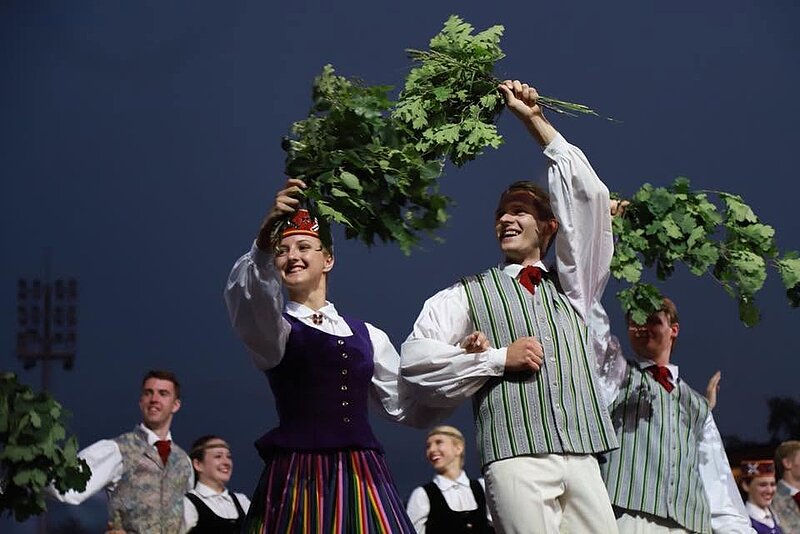
The XX Baltic Student Song and Dance Festival in Riga will bring together student artistic groups from higher education institutions across the Baltic States – 64 choirs, 38 folk dance ensembles and nine wind orchestras. The festival programme includes seven concerts, all open to the public.
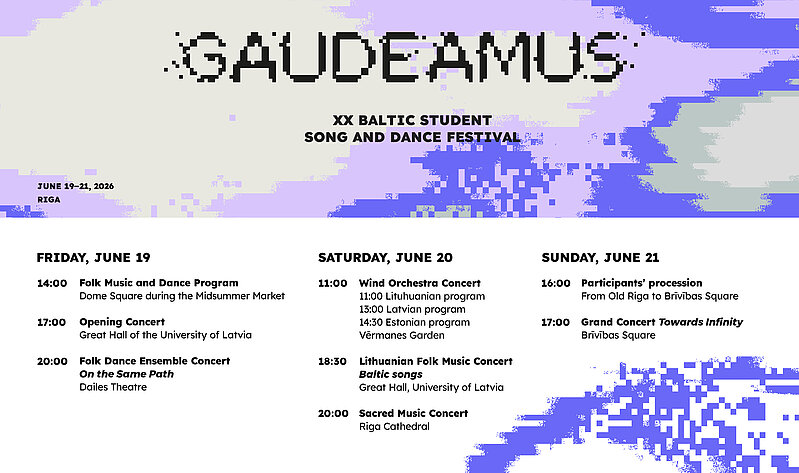
19 June
From 14:00, Dome Square will host a special Gaudeamus folk music and dance programme as part of the traditional Midsummer Market. Performers from all three Baltic States will take part.
At 17:00, the Opening Concert of the XX Baltic Student Song and Dance Festival will take place in the Great Hall of the University of Latvia. The concert is conceived as a continuation of a journey that began 70 years ago, opening new horizons in the story of the Baltic Student Song and Dance Festival. The programme will feature choirs from Latvia and the Symphony Orchestra of the Jāzeps Vītols Latvian Academy of Music.
During the opening evening, the festival’s chief conductors and artistic directors will be honoured. The artistic director of the concert is Edgars Vītols, and the director is Sandis Kalniņš. Admission is by free entrance ticket.
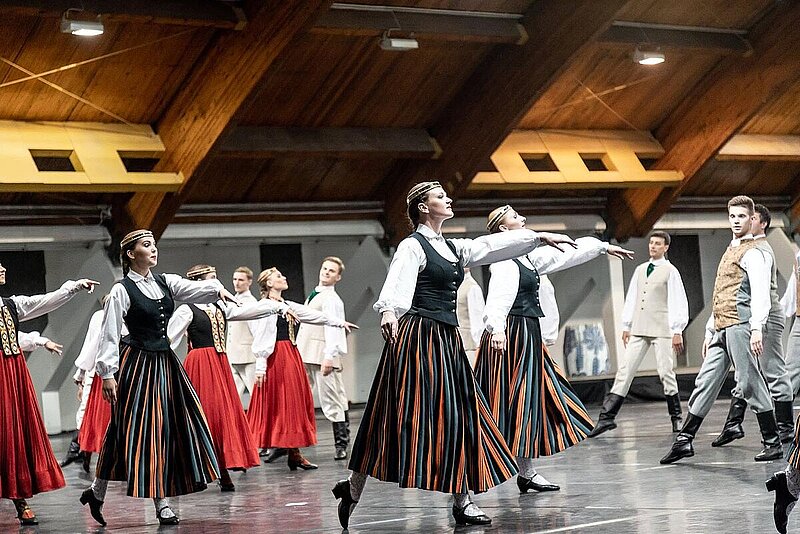
At 20:00, the Folk Dance Ensemble Concert On the Same Path will be held at Dailes Theatre. The concert will present a vibrant journey through the national cultures of the three Baltic States, highlighting both shared traditions and unique cultural expressions. Several folk dance ensembles from each participating country will perform. Latvia will be represented by the Riga Technical University Folk Dance Ensemble Vektors, the University of Latvia Folk Dance Ensemble Dancis, and the Riga Stradiņš University Folk Dance Ensemble Ačkups.
The artistic director of the concert is Dagmāra Bārbale, the director is Diāna Kaijaka, and the script author is Kaspars Bērziņš. Admission is by free entrance ticket.
20 June
On 20 June, Vērmanes Garden will become a meeting place for youth, energy, professional excellence and the wind music traditions of the Baltic States. The Wind Orchestra Concert Programme will feature performances by Lithuanian wind orchestras at 11:00, Latvian wind orchestras at 13:00, and Estonian wind orchestras at 14:30.
At 18:30, the Lithuanian Folk Music Concert Baltic Songs will take place in the Great Hall of the University of Latvia. The concert will bring together 230 Lithuanian student folk musicians. The programme is dedicated to three themes – national identity, family and love for one’s homeland. Folk music traditions will intertwine with contemporary musical expression while preserving the living spirit of tradition. The artistic director is Jolanta Kisielytė-Sadauskienė. Admission is by free entrance ticket.
At 20:00, Riga Cathedral will host the Sacred Music Concert. Each participating country has prepared its own sacred music programme featuring works by national composers. Alongside performances by choirs from Estonia, Lithuania and Latvia, audiences will also hear the magnificent organ of Riga Cathedral, played by organist Aigars Reinis. The artistic director of the concert is Edgars Vītols. Admission is by free entrance ticket.
21 June
On the final day of the festival, 21 June, participants will gather for a procession from the Old Town to Brīvības Square at 16:00. At 17:00, the XX Baltic Student Song and Dance Festival Grand Concert Towards Infinity... will begin. This will be the central and concluding event of the festival, bringing together 3,903 students from Latvia, Lithuania and Estonia in a single artistic moment.
The concert is conceived as a story about humanity in constant motion, balancing tradition and the future, the personal and the collective, the earthly and the infinite universe. Through music, dance, spoken word and the symbolic setting of Brīvības Square, the programme will celebrate the courage of youth to explore, create and transform the world around them while remaining connected to their cultural heritage and the shared identity of the Baltic States.
The grand concert will feature both national programmes from each participating country and joint performances that honour the traditions of the festival. The concert director is Juris Jonelis; assistant director and text author – Sandis Kalniņš; artistic director of the choir programme – Edgars Vītols; artistic director of the dance programme – Dagmāra Bārbale; artistic director of the wind orchestra programme – Māris Martinsons.
About the Festival
The Gaudeamus tradition began in Tartu in 1956 and has since been held 19 times across the Baltic States. It is an important part of Baltic cultural and academic identity, promoting the preservation of traditions and encouraging young people’s participation in folk culture. The festival plays a significant role in safeguarding the unique Song and Dance Festival tradition and strengthening unity among the Baltic States.
The festival is held in rotation among Latvia, Lithuania and Estonia. The XX Baltic Student Song and Dance Festival is organised by the Ministry of Education and Science in cooperation with the University of Latvia and Riga City Council.
All festival events are free of charge. Admission to indoor concerts is with free entry tickets, which will be available from 8 June at 10.00 at “Biļešu paradīze” box offices and at www.bilesuparadize.lv.
The 20th Baltic Student Song and Dance Festival in Riga will bring together student groups from higher education institutions of the Baltic states – 64 choirs, 38 folk dance ensembles, and nine wind orchestras. The programme includes seven concerts, and everyone is welcome to attend.
19 June
From 14.00 in Dome Square, the traditional Midsummer market will be complemented by a special “Gaudeamus” folk music and dance programme, featuring participants from all three Baltic states.
At 17.00 in the Great Hall of the University of Latvia (UL), the Opening Concert of the 20th Baltic Student Song and Dance Festival will take place. The concert is conceived as an affirmation of the continuation of a path begun 70 years ago, opening ever new horizons in the story of the Baltic Student Song and Dance Festival. The concert will feature choirs from Latvia and the symphony orchestra of Jāzeps Vītols Latvian Academy of Music. On the opening evening, the festival’s chief conductors and chief dance leaders will be honoured. Artistic director of the Opening Concert: Edgars Vītols; director: Sandis Kalniņš. Admission with free entry tickets.
At 20.00 at Dailes Theatre, the Folk Dance Ensembles Concert “On the Same Road” will take place. A colourful journey woven through the national cultures of the three Baltic states, revealing both what is shared and what is unique and different. Several folk dance ensembles will represent each participating country. From Latvia: Riga Technical University folk dance ensemble “Vektors”, UL folk dance ensemble “Dancis”, and Rīga Stradiņš University folk dance ensemble “Ačkups”. Artistic director: Dagmāra Bārbale; director: Diāna Kaijaka; script author: Kaspars Bērziņš. Admission with free entry tickets.
20 June
On 20 June, Vērmanes Garden will turn into a musical meeting place for youth, energy, professional mastery, and the Baltic wind music traditions—featuring a wind orchestra concert programme. At 11.00 Lithuanian wind orchestras will perform, at 13.00 Latvian wind orchestras, and at 14.30 Estonian wind orchestras.
At 18.30 in the Great Hall of UL, the Lithuanian folk music concert “Baltic Songs” will take place. The concert will feature 230 Lithuanian student folk music performers. The programme is devoted to three themes – national identity, family, and love for the homeland. Folk music will intertwine with a contemporary sound while keeping the spirit of living tradition alive. Artistic director: Jolanta Kisielīte-Sadauskienė. Admission with free entry tickets.
At 20.00 at Riga Cathedral, the Sacred Music Concert will take place. Each participating country has selected its own sacred music programme featuring national composers. Alongside the sacred music programmes of Estonian, Lithuanian, and Latvian choirs, the mighty organ of Riga Cathedral will also sound, with organist Aigars Reinis. Artistic director: Edgars Vītols. Admission with free entry tickets.
21 June
On the closing day of the festival, 21 June, at 16.30 festival participants will proceed in a procession from Old Riga to Freedom Square, where at 17.00 the grand concert of the 20th Baltic Student Song and Dance Festival “Gaudeamus”, “To Infinity…”, will begin. This will be the central and concluding event of the festival—bringing together 3 903 students from Latvia, Lithuania, and Estonia in a single artistic moment.
The concert is conceived as a message about people in constant motion, shifting between tradition and the future, between the personal and the shared, between the earth and the infinite Universe. Through music, dance steps, words, and the symbolic venue—Freedom Square—the boldness of youth to search, create, and transform the world around them will be highlighted, without losing the connection to cultural heritage and the sense of Baltic unity. The grand concert will be enriched by both the countries’ individual programmes and shared songs and unified moments, honouring festival traditions. Director: Juris Jonelis; assistant director and text author: Sandis Kalniņš; artistic director of the choral programme: Edgars Vītols; artistic director of the dance programme: Dagmāra Bārbale; artistic director of the wind orchestra programme: Māris Martinsons.
About the festival
The “Gaudeamus” tradition began in 1956 in Tartu, and since then the festival has already taken place 19 times in the Baltic region. It is an important part of Baltic cultural and academic identity, promoting the preservation of traditions and youth involvement in folk culture. It is an essential element in preserving the unique Song and Dance Festival tradition and strengthening the unity of the Baltic states. The festival is hosted in turn by one of the Baltic countries. The organisation of the festival is ensured by the Ministry of Education and Science in cooperation with the University of Latvia and the Riga municipality.